
A screw foundation, engineered to a load.
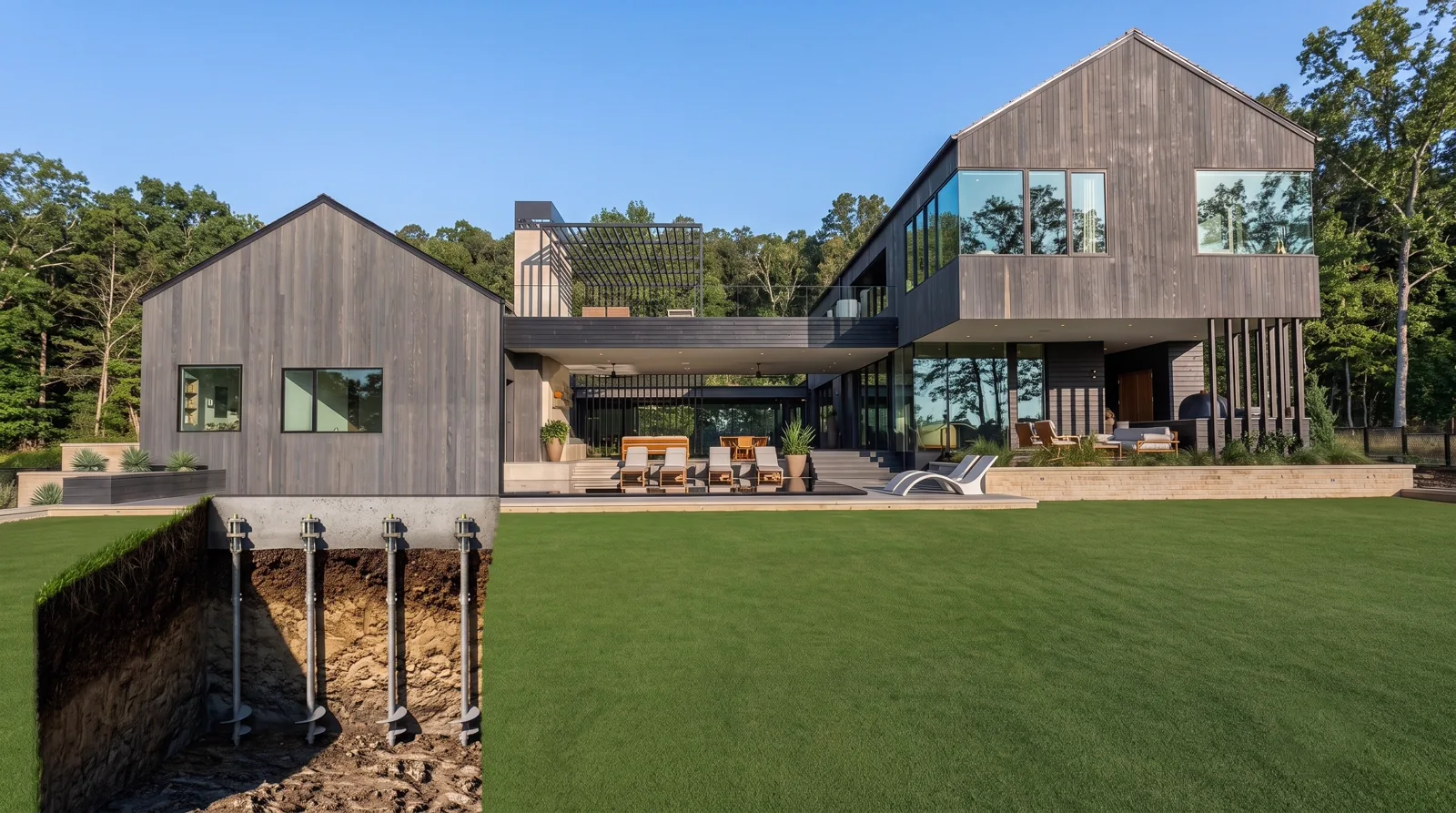
A helical pile is a length of steel pipe or solid shaft with one or more round steel plates, formed into a helix, welded along it. Rotating the shaft into the ground drives those plates downward like the flights of a large screw, until they reach a soil or rock stratum capable of carrying the design load.
Once installed, the pile transfers structural load in two ways at once: end bearing on the lowest helical plate and, depending on soil type, some shaft friction along the length of the pile. A steel bracket or new footing ties the top of the pile to the structure above — a new grade beam and foundation in new construction, or the existing footing directly in an underpinning retrofit.
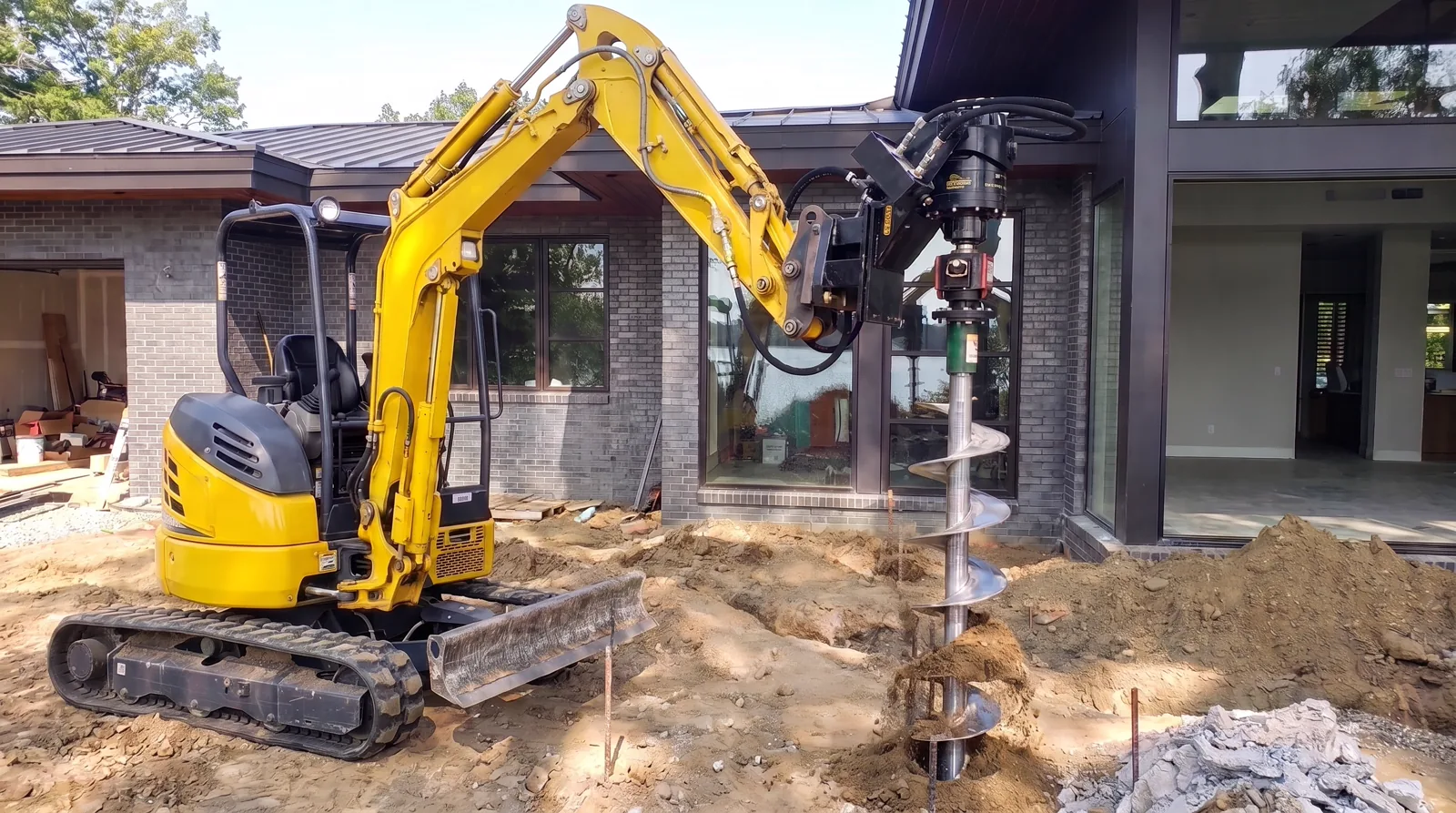
A compact excavator, a hydraulic drive head, one shaft at a time.
A compact excavator fitted with a hydraulic drive head rotates the lead section — the plate-bearing tip — into the ground. As it advances, threaded extension sections are coupled on until the pile reaches its design depth, with no spoils pile and minimal excavation compared to a drilled shaft.
Capacity confirmed the moment it’s installed.
The drive head's torque output is monitored continuously through installation. Installation torque correlates to ultimate axial capacity through an empirical torque factor specific to the pile product and the soil it's advancing through — a relationship established through decades of full-scale load testing across the helical pile industry.
- Real-time confirmation of bearing capacity at the moment of installation, not inferred after the fact
- No concrete cure time before the pile can carry design load
- A documented torque log for every pile, tied to its as-built depth and location
- Installation can be adjusted on the spot — extended deeper or relocated slightly — if torque readings don’t reach the target before design depth
Helical pile or drilled pier?
Neither method is universally better; the site and the load decide. Helical piles and drilled piers are both coordinated through the Kairos network, and site evaluation determines which one is right before pricing is set.
Favors a helical pile
Limited-access lots, tight urban infill, hillside sites with restricted equipment staging, a need to avoid excavation spoils, and loads that don’t exceed what the pile product is rated for.
Favors a drilled pier
Very high axial or lateral loads, large-diameter commercial elements, and ground with cobbles, boulders, or other obstructions a helical plate can’t advance through cleanly.
New construction
Piles are set on an engineered layout before grade beams are formed, sized and spaced to the structure’s load and the geotechnical report.
Underpinning & retrofit
Piles are installed at the perimeter of an existing footing and bracketed to it, arresting settlement or lifting the structure where the engineering calls for it.
Built for expansive clay and karst.
Central Texas foundations contend with two recurring conditions: expansive clay that swells and shrinks with seasonal moisture, and karst-influenced limestone near the Balcones Escarpment where voids and cavities can sit beneath an otherwise solid-looking surface.
- Helical piles bear below the active zone where seasonal clay movement is strongest, isolating the structure from surface soil that swells and shrinks
- Continuous torque monitoring flags a sudden capacity drop consistent with a void or soft zone before the pile passes through it, so depth or pile location can be adjusted without a redesign delay
- No wet concrete in the ground means no dependency on a stable shaft wall while curing — a real advantage in loose or karst-compromised soils
Built for hillside and limited-access lots.
Custom homes on Central Texas hillside and waterfront lots — including Lake Austin estates — often sit on steep grades with narrow access and little room to stage a drill rig or manage excavation spoils. A compact excavator and a helical pile rig fit where larger equipment can’t, with less disturbance to the surrounding site.
Helical piles, answered directly.
What is a helical pile?
How is a helical pile installed?
Can helical piles be used to underpin an existing foundation?
How is helical pile capacity verified during installation?
When is a helical pile the right choice over a drilled pier?
Have a site that might call for helical piles?
Send your geotechnical report, survey, or plans. Kairos will review the site and coordinate the specialty contractor to install and verify it.