
Why does a Georgetown drilled pier project need rock socket design, not just depth?
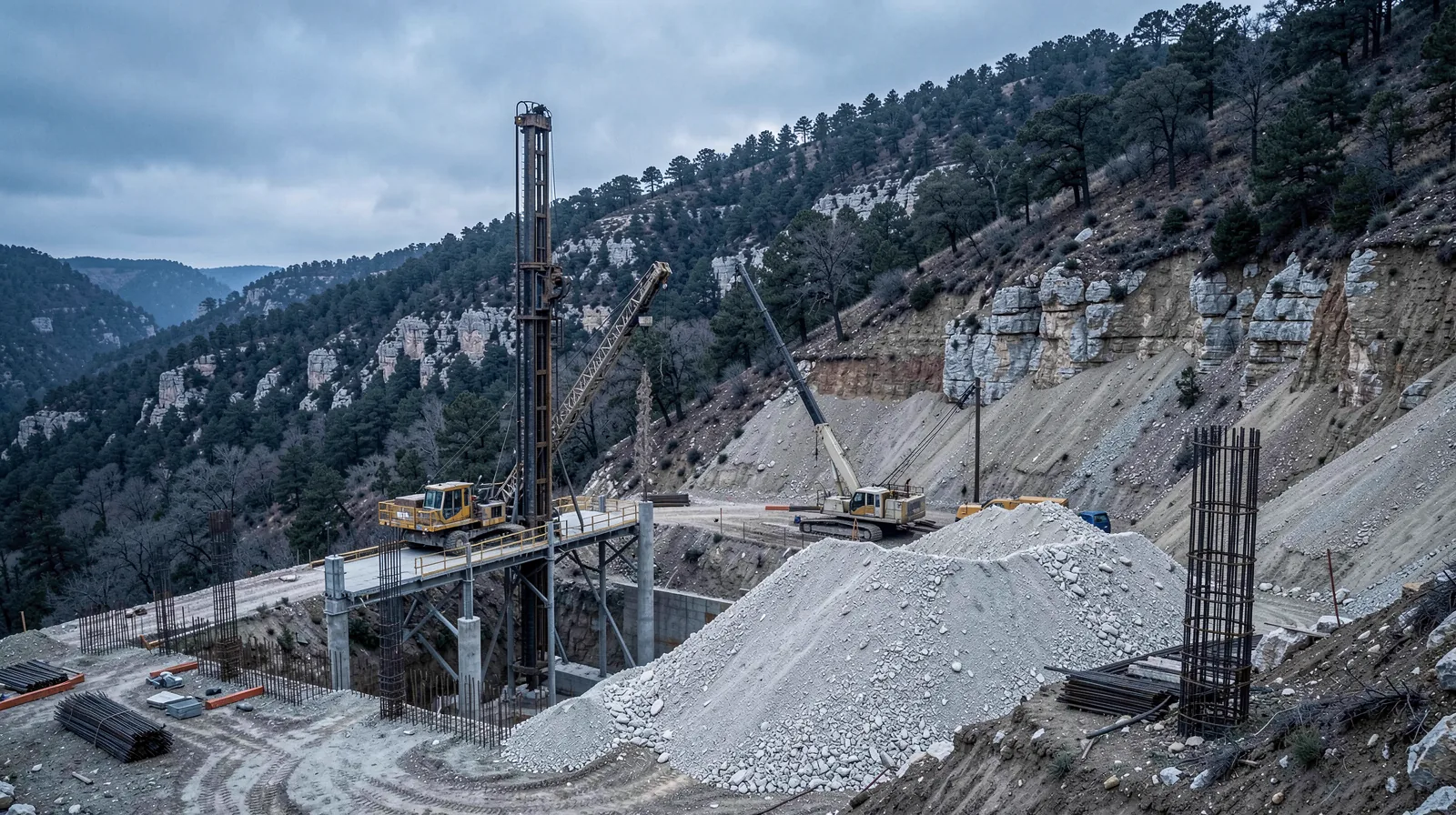
Georgetown sits largely on the Edwards limestone shelf, where shallow bearing rock is common and the governing design question shifts from "how deep to reach stable clay" to "how deep to socket into competent rock, and is there a void nearby." Karst features — voids and solution cavities formed by dissolution of the limestone — don’t show up consistently between borings, so rock socket length and the drilling method both need to account for that possibility, not just the confirmed boring log.
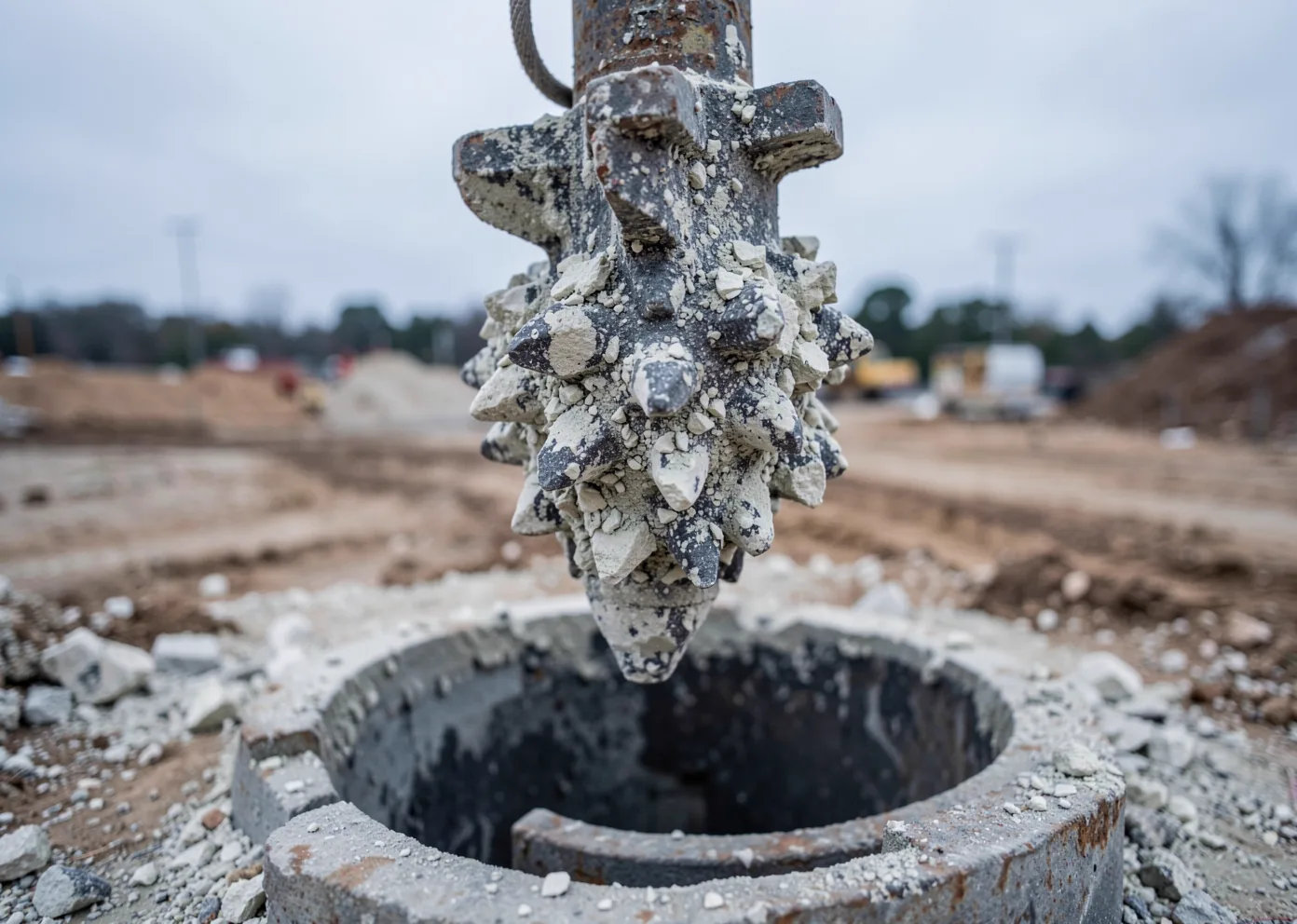
Karst gets caught at the auger, not after the pour.
Georgetown’s Edwards limestone shelf can carry solution voids between borings. Cuttings from every shaft are inspected in the field and compared to the geotechnical log before the shaft is accepted.
Karst risk lives in the gaps between borings.
A boring log confirms conditions at one point. Karst-influenced limestone can carry a void a few feet away from a clean boring, which is why rock socket design in Georgetown has to plan for that possibility rather than treat every boring as fully representative of the site. Drilling method and inspection during installation both matter more here than in a straightforward clay site.
- Shallow bearing rock often means shorter piers but more careful socket design
- Void or cavity risk near the Balcones Escarpment influences and around Georgetown’s limestone shelf requires drilling-method planning, not just depth planning
- Mixed-use development around the historic square carries different access constraints than SH-130 corridor industrial sites
- Rock excavation methods differ from soil drilling and affect schedule and equipment planning
Georgetown’s growth spans a historic square and a modern industrial corridor.
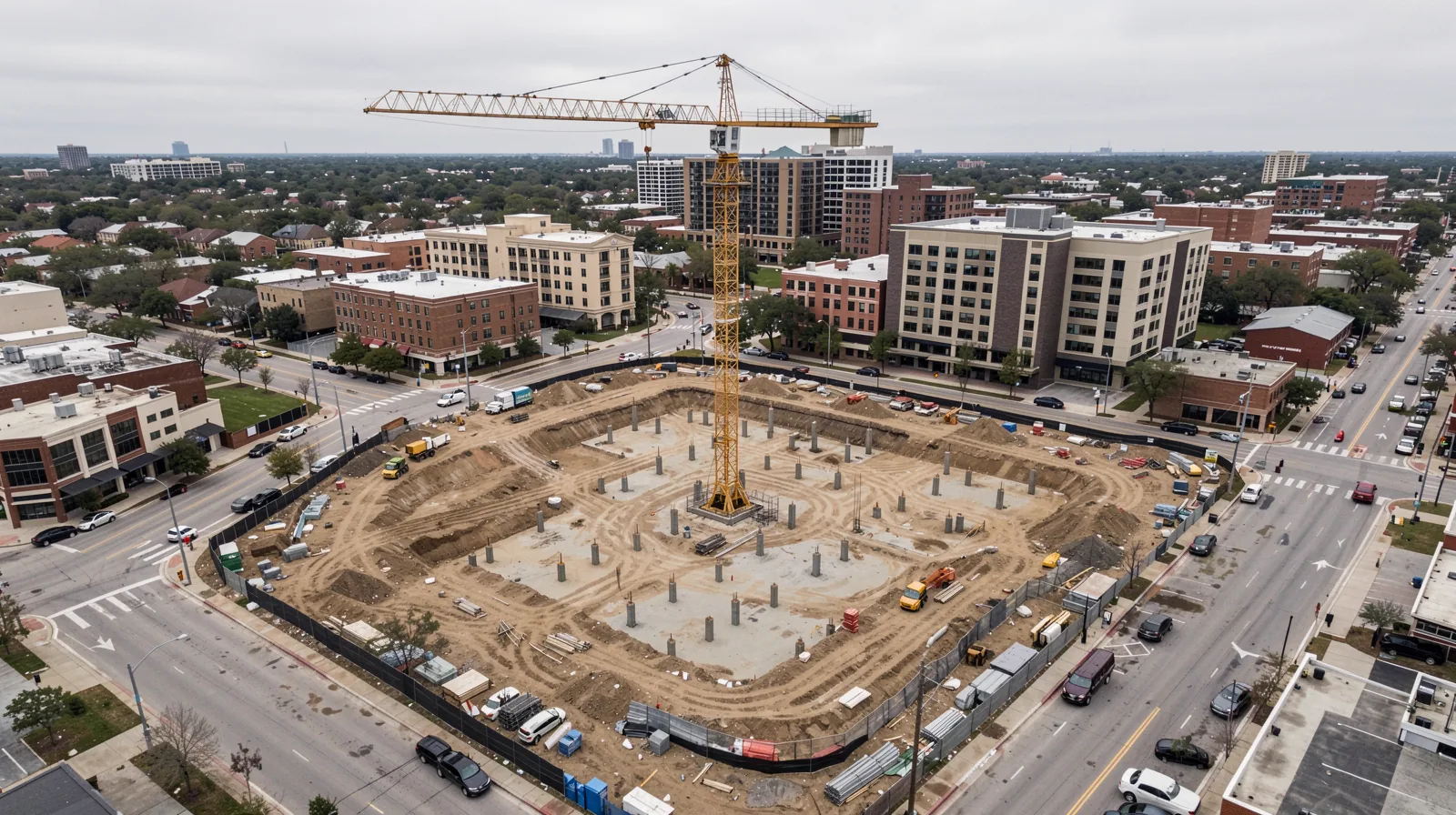
Georgetown’s commercial and institutional growth — from mixed-use development around the historic square to industrial and distribution projects along the SH-130 corridor — sits across varying depths to bearing rock. We check each site’s actual rock elevation and karst risk rather than assuming a fixed shallow-rock depth applies everywhere in the city.
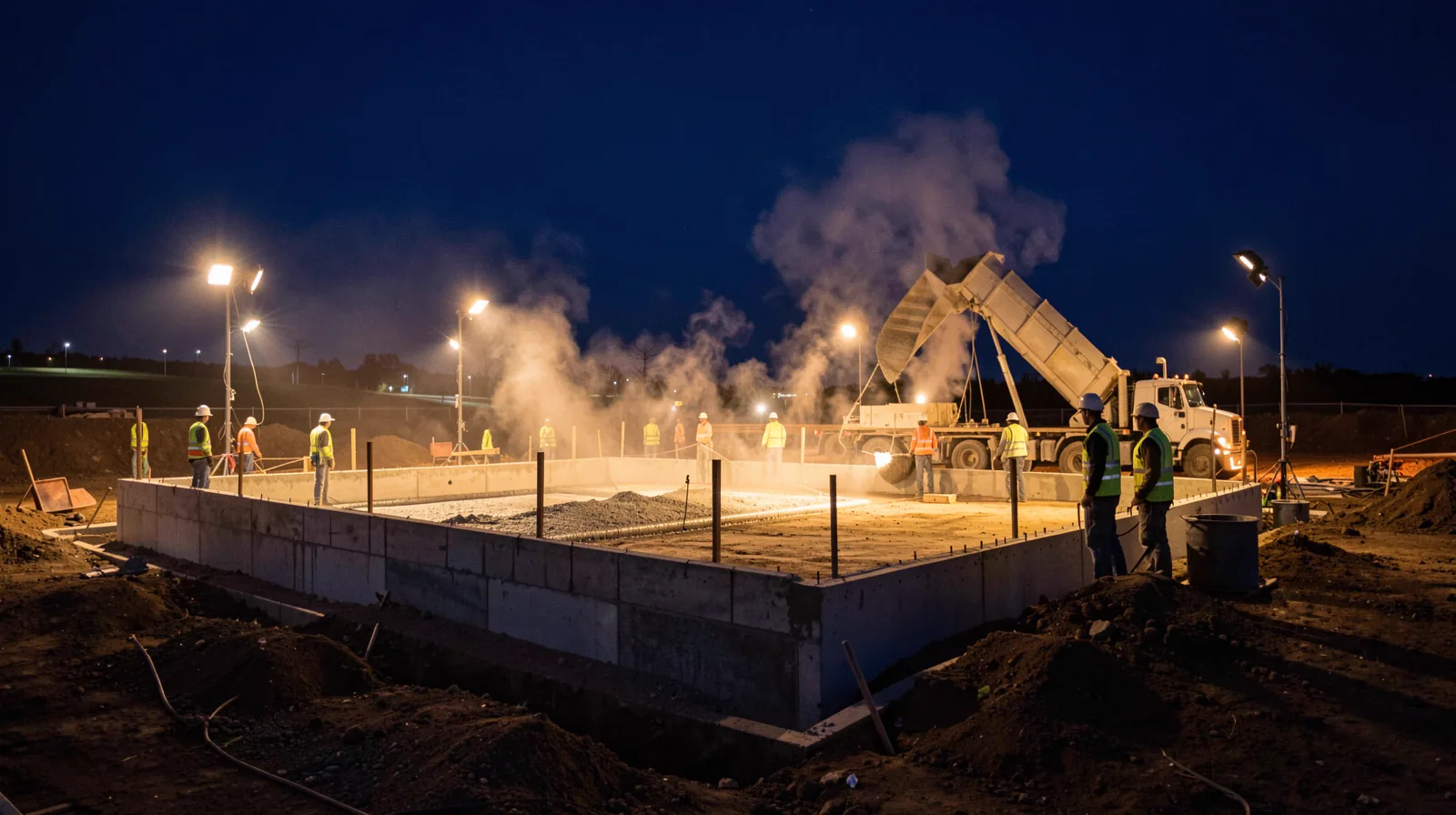
We review structural drawings for consistency with the foundation design before bidding, and we hold stated due dates on every invitation. Early subcontractor involvement during design development helps Georgetown GCs and developers catch rock-condition and concrete-scope conflicts before they become change orders.
Georgetown foundation questions, answered directly.
Does Georgetown construction always hit shallow rock?
What is karst and why does it matter for a Georgetown foundation?
Are drilled piers different in rock versus clay?
Who handles structural concrete for commercial builds in Georgetown?
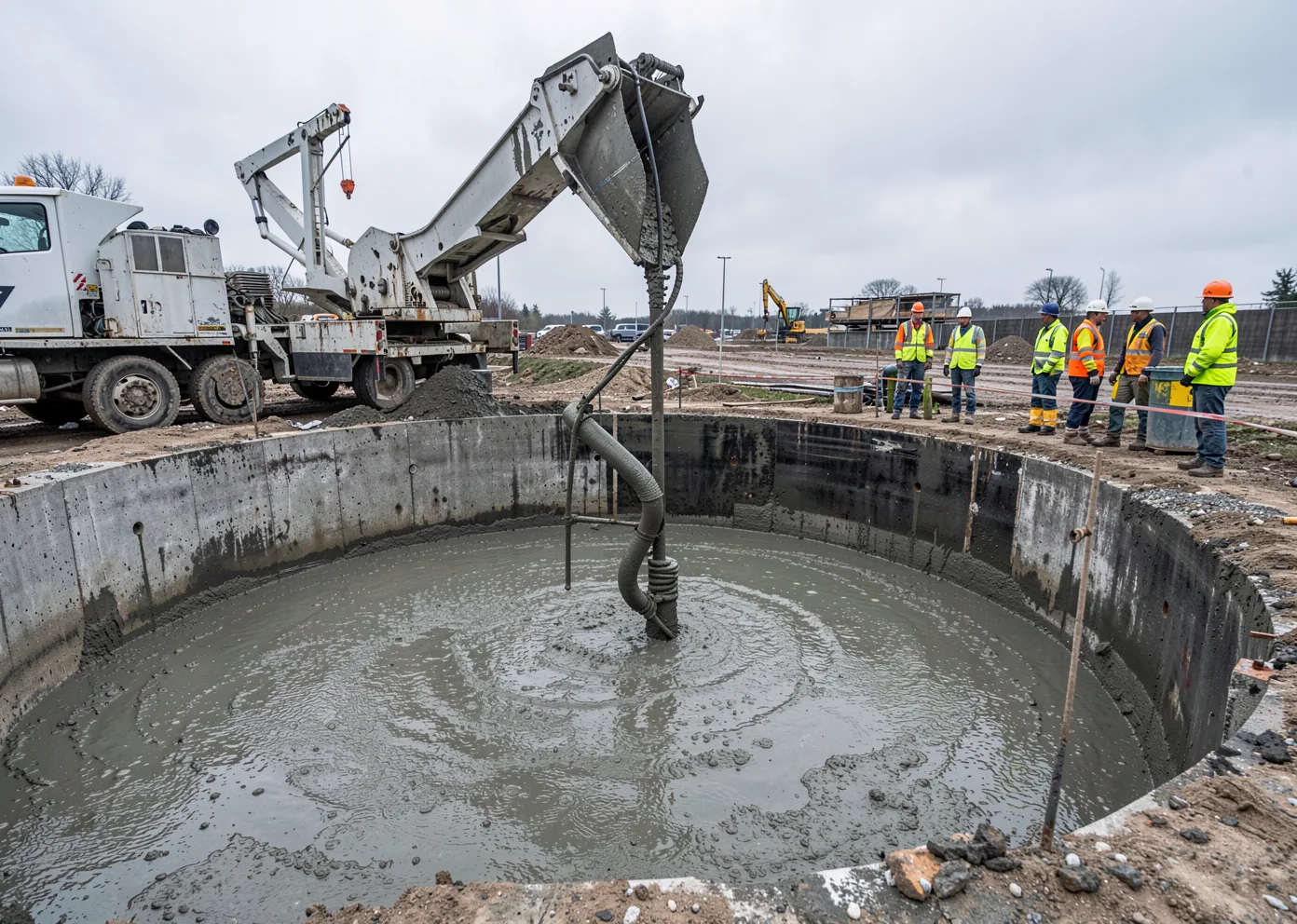
Have a Georgetown project with rock conditions to price?
Submit your structural drawings and any available geotech or rock-elevation data for a bid.