
Carrying load past reactive soil.
Expansive clay soils common across the Austin metro swell and shrink with seasonal moisture changes, generating uplift and lateral forces that shallow spread footings aren’t built to resist. Drilled piers extend below the active soil zone into stable bearing strata, isolating the structure from that movement. They’re also the system of choice where fill, karst features, or bearing-capacity concerns rule out a conventional footing.
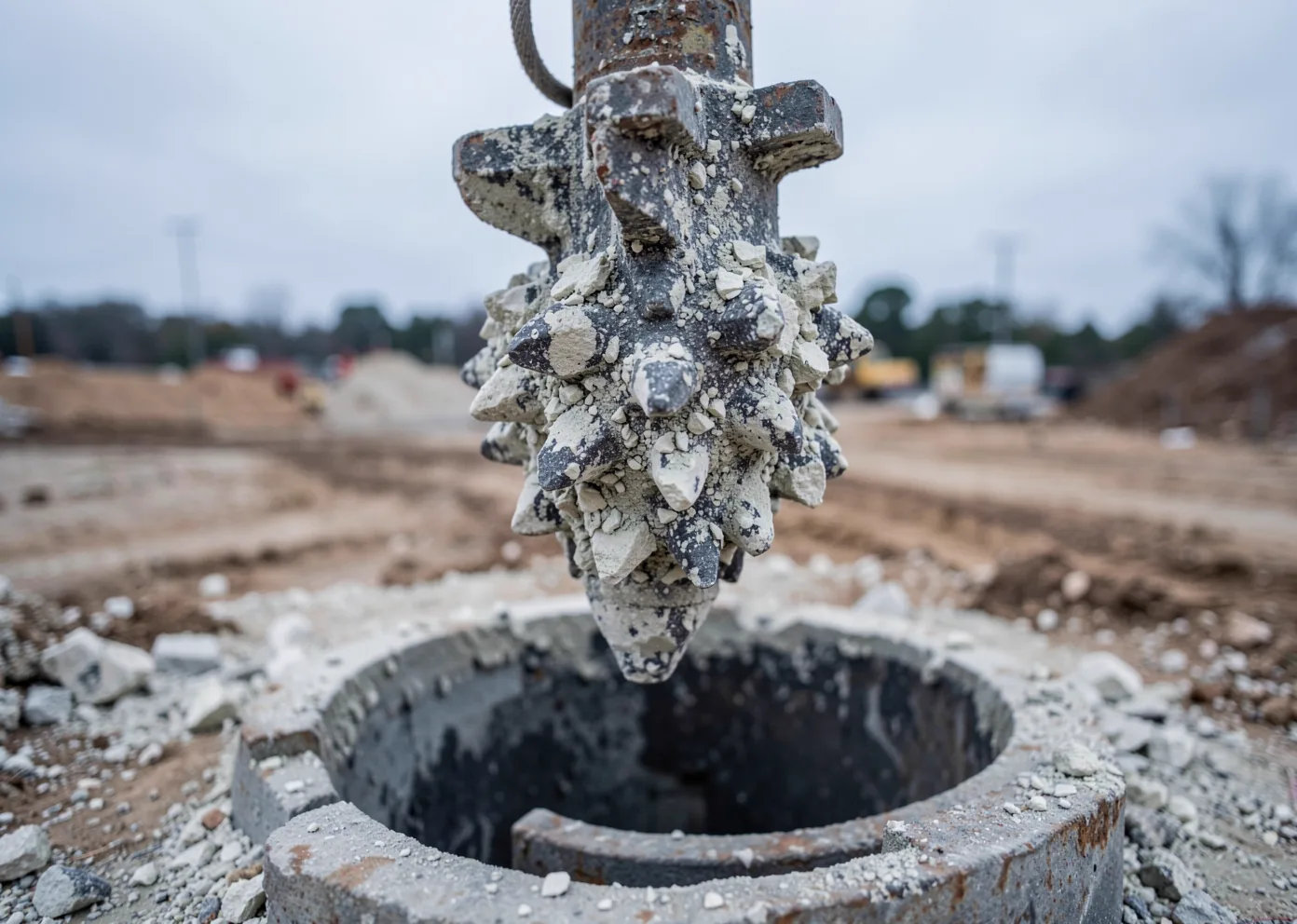
Rock sockets are confirmed in the field, not assumed on paper.
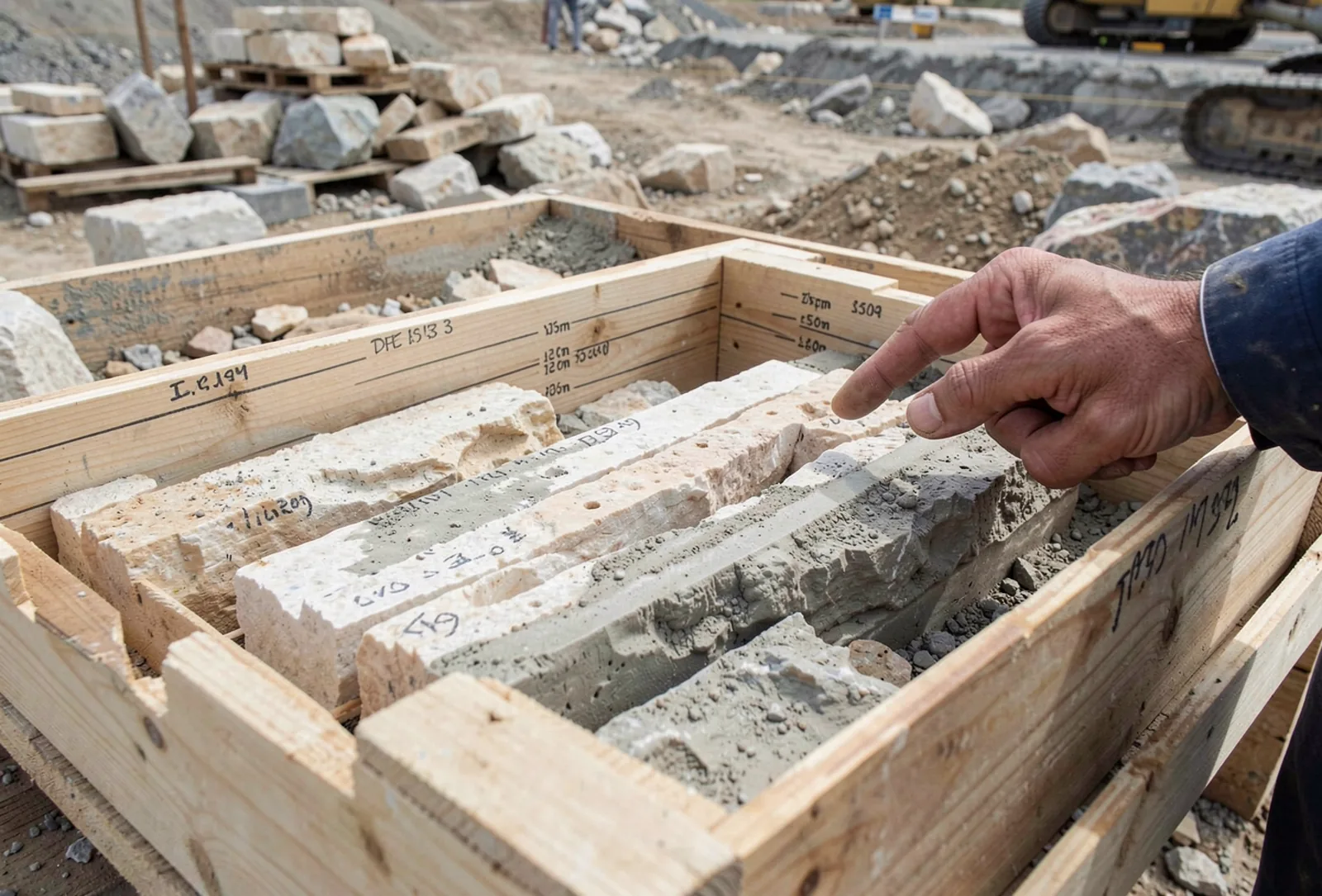
When an auger reaches bearing rock, cuttings are inspected and logged against the geotechnical boring log before the shaft is accepted for rebar and concrete — catching a karst void or an unexpected bearing elevation before it becomes a change order.
From geotech report to as-built log.
Review geotech & drawings
Confirm pier depth, diameter, and reinforcement schedule against actual boring data before pricing.
Flag inconsistencies early
Discrepancies between the pier schedule and soil report get raised before bid day, with alternatives when they exist.
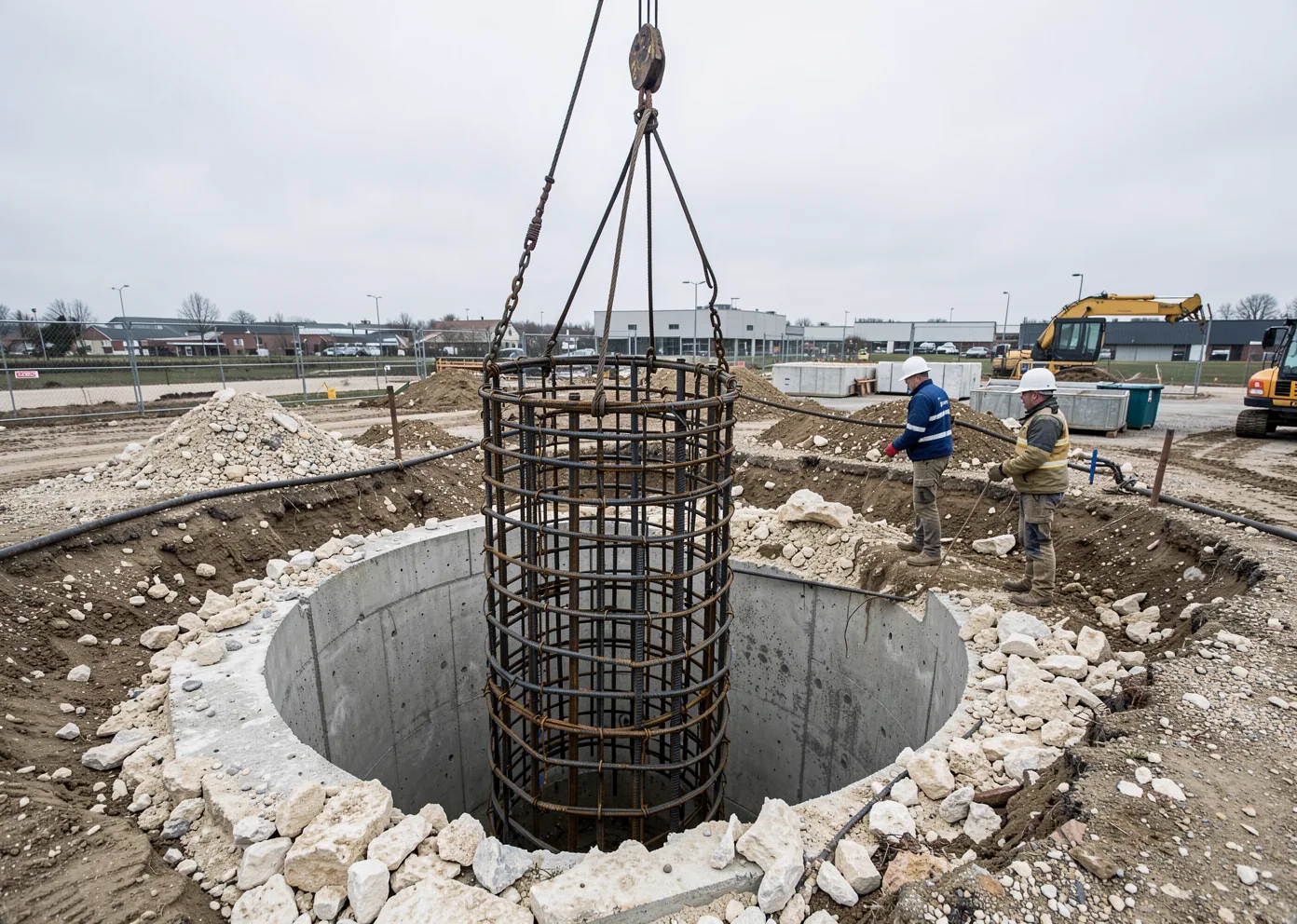
Drill & install
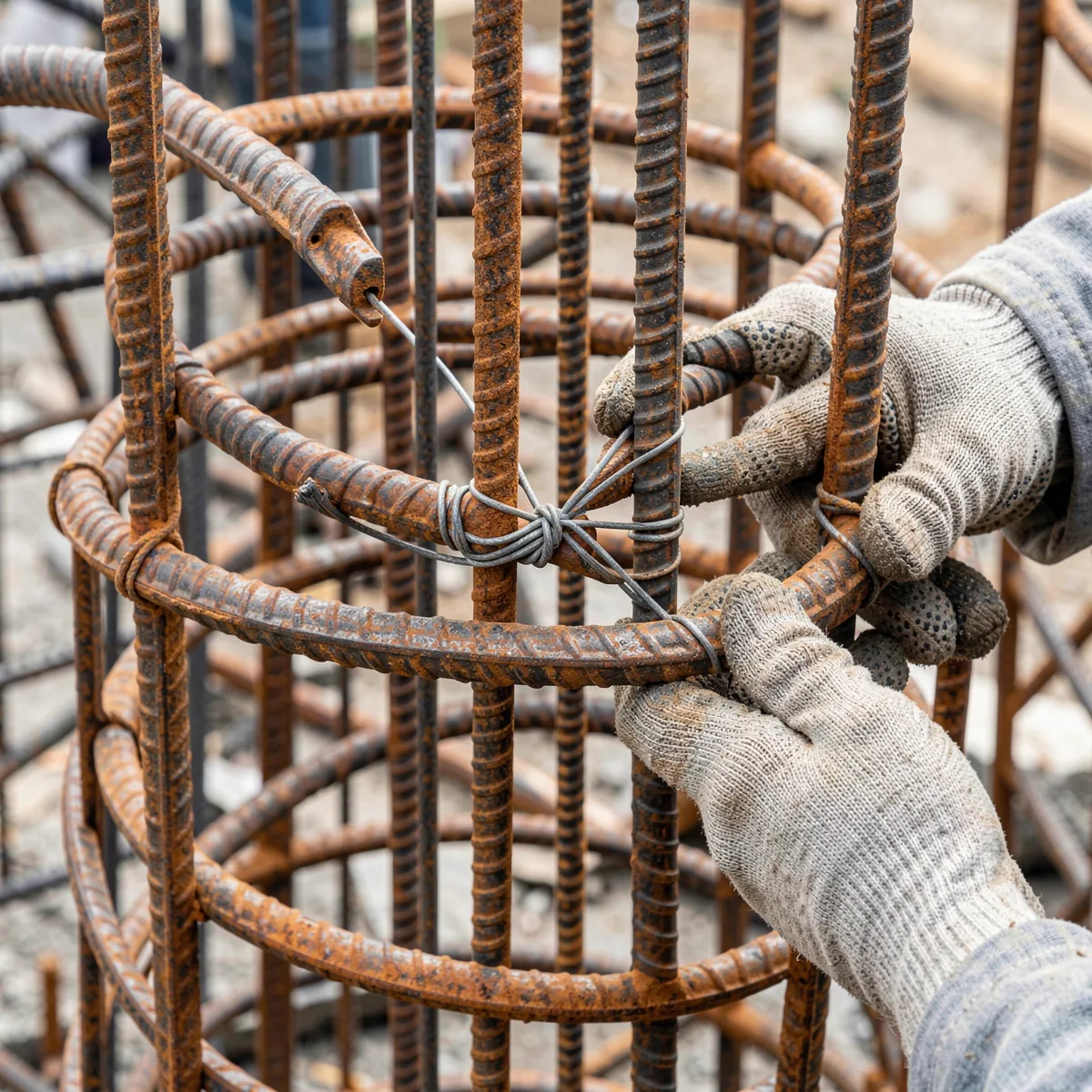
To depth and diameter specification, straight-shaft or belled as engineered.
Coordinate concrete placement
Pier cap and grade beam concrete placement coordinated with Ram Concrete’s pumping and pour crews.
Document as-built logs
Pier logs documented for the structural engineer of record.
Industry QA/QC methods for drilled shaft work.
- Crosshole Sonic Logging (CSL) — an ultrasonic method that verifies concrete integrity along the full length of a drilled shaft using access tubes cast into the pier.
- Gamma-Gamma Logging (GGL) — a nuclear density method used to detect concrete anomalies, voids, and density variation within a shaft.
- Osterberg Cell (O-cell) load testing — a bi-directional load test performed with a hydraulic cell cast into the shaft, used to verify pier capacity without surface reaction load.
- Static and statnamic load testing — direct load testing methods used to confirm a pier’s bearing and uplift capacity against design assumptions.
- Concrete cylinder breaks — standard compressive-strength testing of concrete samples taken during placement, verified against the specified mix design.
Drilled piers, answered directly.
What is a drilled pier foundation?
What is the difference between a straight-shaft and a belled pier?
How is drilled pier quality verified after installation?
Why do drilled piers matter more in Central Texas than other regions?
Have a geotech report and pier schedule ready?
Submit a bid invitation for review.